Advice to WWII Soldiers in Iraq Relevant Today
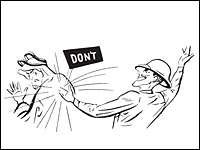
 Enlarge Instructions for American Servicemen in Iraq During World War II
, written in 1943, provides basic tips on Iraqi customs and history, and features simple illustrations, such as this admonition against slapping Iraqis on the back.
Read an excerpt on the importance of good manners. 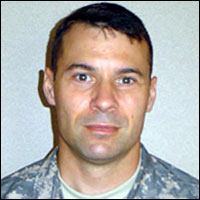
Lt. Col. John Nagl wrote the foreword to the reissued version of the handbook. Courtesy U.S. Army
All Things Considered, August 9, 2007 · During World War II, the U.S. Army published a book of cultural dos and don'ts for soldiers serving in Iraq. It's a simple instruction manual on Iraqi customs and culture that still has relevance 60 years later.
The book includes practical tips: Keep away from mosques, never eat with your left hand, always respect Muslim women, and try speaking Arabic.
"One really wishes that we'd had this book in our breast pockets when we arrived in Iraq in September of 2003," Army Lt. Col. John Nagl tells Michele Norris.
Nagl wrote the foreword to the modern version of
Instructions for American Servicemen in Iraq During World War II, and he requires that the soldiers he trains read portions of the 1943 book.
For instance, the handbook notes that guerrilla fighters are particularly willing to sacrifice their lives during the Muslim holy month of Ramadan.
"We found that out, but unfortunately, we found it out by the number who were willing to commit suicide attacks [during Ramadan]," Nagl says.
Nagl says that soldiers do learn about Iraqi culture and customs during predeployment training and that they often discuss such issues on the ground.
But he says what he missed most from not having the manual with him was "the sense of who the Iraqi people are."
"I came to know them as very generous, very concerned for their families, very proud, and fiercely loyal to their families and to their tribes," Nagl says.
Nagl says he is trying to teach the soldiers he trains that the relationships they build "over cups of tea" with Iraqi partners are perhaps the most important component to eventual U.S. victory in the war.
"One of the quotes I found most appealing in the book was that 'Americans success or failure in Iraq may well depend on whether the Iraqis like American soldiers or not,'" he says.
Excerpt: 'Instructions for American Servicemen in Iraq During World War II'
“Do your swearing in English. Avoid the native oaths – you will not know their exact meaning and they may get you into trouble. Don't under any circumstances call an Iraqi a "dog," a "devil," a "native," or a "heathen." These terms are all deadly insults to him.”
Manners Are Important
Moslems pay attention to good manners.
Handshaking in Iraq is considered an important part of good manners. You will be greeted with a handshake on every occasion that you meet an Iraqi. His handshake is cordial and sincere. Return it in the same spirit.
But do not touch or handle an Iraqi in any other way. Do not wrestle with him in fun, and don't slap him on the back. Any such contact is offensive to his idea of good manners. Above all, never strike an Iraqi.
Do your swearing in English. Avoid the native oaths – you will not know their exact meaning and they may get you into trouble. Don't under any circumstances call an Iraqi a "dog," a "devil," a "native," or a "heathen." These terms are all deadly insults to him.
They do not drink liquor or eat pork. So respect their feelings and do not drink in their presence. They do not like to see others drink and it offends them to see others drunk. Never give them pork to eat or offer it to them even in fun.
Pigs are "unclean" to Moslems. So are dogs. If you happen to have a mascot dog, be particularly careful to keep him away from mosques.
Moslems do not let other people see them naked. Do not urinate in their presence. They do it squatting and dislike to see other people do it standing up. These things may seem trivial, but they are important if you want to get along well with the Iraqis.
Moslem Women
Moslem women do not mingle freely with men. The greater part of their time they spend at home in the company of their families. Never make advances to Moslem women or try to attract their attention in the streets or other public places. Do not loiter near them when they are shopping. If a woman has occasion to lift her veil while shopping, do not stare or smile at her. Look the other way. These rules are extremely important. The Moslems will immediately dislike you and there will be trouble if you do not treat women according to their standards and customs.
These rules apply both to the cities and towns and to the villages and the desert. The village and desert women go unveiled more often than the women in the cities and seem to have more freedom. But the rules are still strict. Any advance on your part will mean trouble and plenty of it. Even when speaking to Iraqi men, no mention should be made of their female relatives. The Iraqi themselves follow this custom and would resent anyone, especially a foreigner, not doing the same.
To repeat – don't make a pass at any Moslem woman or there will be trouble. Anyway, it won't get you anywhere. Prostitutes do not walk the streets but live in special quarters of the cities.
Iraqi Hospitality
If you are entertained in an Iraqi city home, you will probably find dishes and silverware and customs somewhat like our own. But do not eat too much of the first course of a meal. There is probably more coming.
In the country there will probably be no table, plates, or silverware. You will be expected to sit on the ground as your host does. Follow his example. Roll up your right sleeve and eat with the tips of your right fingers – even if you are a southpaw. It is considered rude to eat with your left hand. If your host tears off tid-bits and hands them to you, eat them. In the country there will probably be only one course.
After the meal, water will be brought to wash your hands and a towel to wipe them.
In the desert the customs are much the same as in the country, except that there is less variety in the food. You may be offered only some bread and milk or soured milk, like buttermilk. These people are poor and are offering you the best they have. You must not refuse it – but do not take too much.
Coffee drinking is equally popular in the city, country, or desert. Even a shopkeeper may offer you a small glass of coffee. Do not refuse it or throw it away half-drunk, even if it does not taste like our American coffee. If you are offered a second cup, take it, and also a third. But it is customary to refuse a fourth.
These are some general hints about manners. But the main thing is the spirit of politeness and courtesy. If you show this, the Iraqis will understand and forgive any lapses you may make through not knowing their customs. If you show that you really want to be friendly, you'll get along.
Book Description
“American success or failure in Iraq may well depend on whether the Iraqis like American soldiers or not.”
The U.S. military could certainly have used that bit of wisdom in 2003, as violence began to eclipse the Iraq War’s early successes. Ironically, had the Army only looked in its own archives, they would have found it—that piece of advice is from a manual the U.S. War Department handed out to American servicemen posted in Iraq back in 1943.
The advice in Instructions for American Servicemen in Iraq during World War II, presented here in a new facsimile edition, retains a surprising, even haunting, relevance in light of today’s muddled efforts to win Iraqi hearts and minds. Designed to help American soldiers understand and cope with what was at the time an utterly unfamiliar culture—the manual explains how to pronounce the word Iraq, for instance—this brief, accessible handbook mixes do-and-don’t-style tips (“Always respect the Moslem women.” “Talk Arabic if you can to the people. No matter how badly you do it, they will like it.”) with general observations on Iraqi history and society. The book’s overall message still rings true—dramatically so—more than sixty years later: treat an Iraqi and his family with honor and respect, and you will have a strong ally; treat him with disrespect and you will create an unyielding enemy.
With a foreword by Lieutenant Colonel John A. Nagl reflecting on the manual’s continuing applicability—and lamenting that it was unknown at the start of the invasion—this new edition of Instructions for American Servicemen in Iraq will be essential reading for anyone who cares about the future of Iraq and the fate of the American soldiers serving there.
 you aren't going to iraq to change the iraqis. just the opposite. we are fighting this war to preserve the principle of "live and let live." maybe that sounded like a lot of words to you back home. now you have a chance to prove it to yourself and others. If you can, it's going to be a better world to live in for all of us. you aren't going to iraq to change the iraqis. just the opposite. we are fighting this war to preserve the principle of "live and let live." maybe that sounded like a lot of words to you back home. now you have a chance to prove it to yourself and others. If you can, it's going to be a better world to live in for all of us. |


 Post Options
 Thanks(0)
 Quote
Quote  Topic: Advice to WWII Soldiers in Iraq Relevant

 Tweet
Tweet


 Topic Options